
Scanning Electron Microscopy (SEM)
Principle
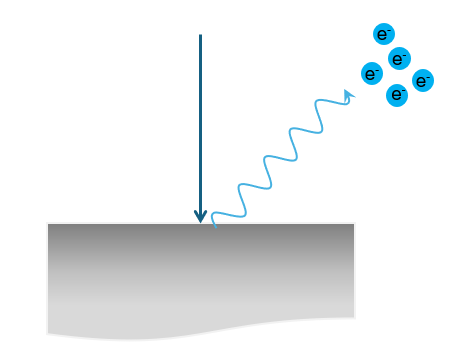
A scanning electron microscope (SEM) is an instrument that uses an electron beam to observe the microstructure of a sample surface. Electrons emitted from the electron gun are accelerated by a high voltage and then focused by electron lenses into a finely focused electron beam (electron probe). The scanning coils control the electron beam to scan the sample surface. When the electron beam interacts with the sample, various signals are generated, such as secondary electrons (SE) and backscattered electrons (BSE). A highly magnified image is generated by synchronizing the signal intensity with the scanning position of the electron beam and displaying the resulting brightness on the monitor.
Diagram Showing the Basic Principle
Applications
・To understand the surface topography and compositional differences in various materials
・Used in a wide range of fields, such as materials science, semiconductors, metals, ceramics, biology, and medicine
・To obtain transmitted-electron (STEM) images from a thinned sample
・For observation under special conditions, such as low-vacuum, non-air-exposed, or in‑situ environments
Features and Limitations
<Features>
1. Compared to an optical microscope, it enables a broad magnification range from several tens up to more than one million.
2. Provides high resolution that allows detailed observation of fine surface structures.
3. Electron irradiation provides not only topographical information but also a variety of signals (SE, BSE, TE, EDX, WDX, EBSD, EBIC, CL, etc.).
<Limitations>
1. Moist samples or samples with low electrical conductivity require pretreatment, such as dehydration or conductive coating.
2. Magnetic materials must be handled with caution, as they can affect the electron beam.
3. Difficulties arise when observing deep internal structures from the surface, requiring cross-section preparation.
4. Because color information cannot be obtained, not everything that can be observed with an optical microscope can be identified.
Important Notes When Making Analysis Requests
Basic Sample Information
▸Sample size: Up to approximately 20 mm square, with a thickness of up to about 4 mm.
*For larger sample sizes, please contact us for further assistance
▸Please contact us regarding magnetic or powder materials.
▸Please ensure that the samples contain no moisture, solvents, or similar substances.
▸Preferably, the backside of the sample should be flat.
Required Information
▸Materials: Main material, additives, and film composition
▸The desired observation magnification, sample size, or other specifications
▸Information of the sample’s electrical conductivity
▸Magnetic properties
When Sending the Sample
▸Please place the sample in a chip case, wafer case, or similar container, and ensure that nothing touches the observation surface during transportation. (Please ensure that the sample is protected from breakage or damage during transportation.)
▸When placing the sample in a case, make sure it is secured so that it does not move inside.
*Please do not use strong adhesive tapes or liquid materials to secure the backside.
▸Please indicate the Sample No. and ID (labeled on the sample surface, on the case, etc.).
*Please do not scribe on the backside
Application Notes

- TOP >
- Services >
- Material Analysis Services >
- Scanning Electron Microscopy (SEM)
