X-ray Photoelectron Spectroscopy(XPS)

Principle

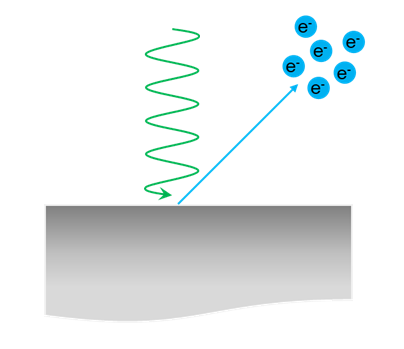
Using an X-ray beam with a diameter ranging from 10 to 100μm, this analytical technique evaluates elemental composition ratios by detecting photoelectrons emitted from atoms located within a few nm beneath the sample surface. The bonding states of neighboring atoms can be evaluated based on the measured spectral energy shift. Since detection depths depend on the angle between the sample and the detector, measurements of shallower detection depth is also possible (angle-resolved measurements).


Diagram Showing the Basic Principle


XPS原理イメージ図


Applications

Evaluation of thin film composition ratio (thicknesses in the nm range are also acceptable)

Depth profiles of deposited samples

Status evaluation of the surface-modified layer

Investigation of oxidation level in metal oxide films

Evaluation of bonding configurations in DLC films (sp3/(sp2+sp3))

Non-destructive evaluation of surface conditions at the nm scale (angle-resolved measurement)


Features and Disadvantages

<Features>

1. Reproducibly identify the elemental composition ratio of the sample surface.

2. A precise charge neutralization mechanism enables highly insulating samples to be measured without difficulty.

3. Since no preparation is required, fewer factors influence sample-to-sample comparisons.

4. Not only can the elemental composition ratio be determined, but the bonding with neighboring atoms can also be analyzed.

5. Depth profiles can be obtained by alternately conducting sputtering with Ar monomer ions and performing measurements.


<Disadvantages>

1. Detection sensitivity for lighter elements is low and can be affected by interference from other elements.

 ・For Li, few atom% is required

 ・H and He cannot be detected

2. Cannot be used with samples that could be damaged or decomposed by the X-ray irradiation.

3. Evaluation of bonding states that are not in the Handbook are difficult.

4. Depth profile analysis cannot be conducted on samples that exhibit selective sputtering behavior under Ar monomer sputtering (e.g.,TiO2、ZrO).

5. Caution is required when measuring magnetic materials, as their spectral shape may change during measurement.

Contact Us

  • TOP      >      
  • Services      >      
  • X-ray Photoelectron Spectroscopy (XPS)
TOP